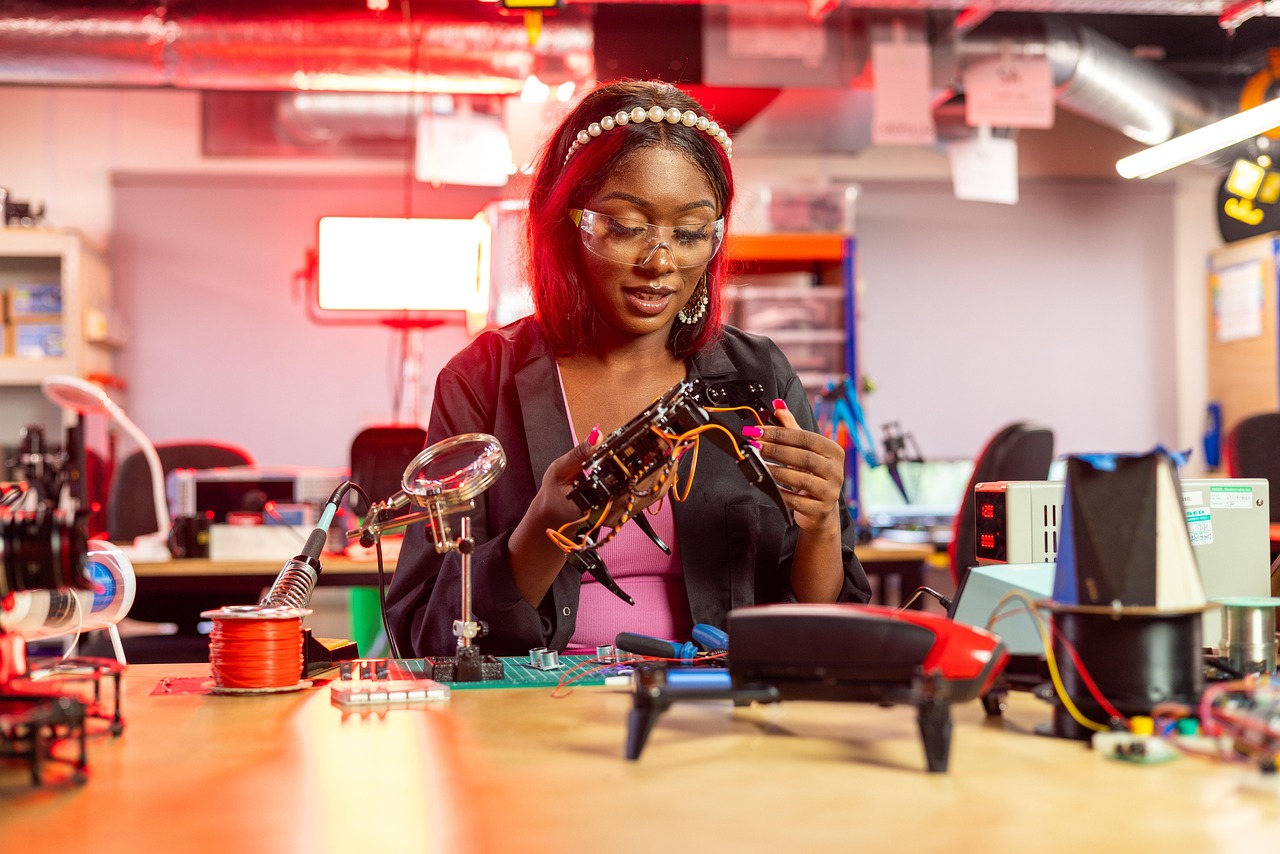
In a world defined by rapid technological shifts and evolving social landscapes, traditional learning models are no longer sufficient. Transformational learning labs emerge as dynamic spaces where innovation meets education, creating environments that prepare individuals for challenges we cannot yet imagine.

These collaborative ecosystems represent more than just physical or digital spaces—they embody a philosophy that learning should be active, relevant, and deeply connected to real-world problem-solving. By reimagining how we acquire knowledge and develop skills, transformational learning labs are unlocking human potential at an unprecedented scale.
🌍 The Urgency of Future-Readiness in Modern Education
The Fourth Industrial Revolution has fundamentally altered the employment landscape. According to the World Economic Forum, approximately 50% of all employees will need reskilling by 2025 as adoption of technology increases. This statistic alone underscores why conventional educational approaches fall short in preparing learners for tomorrow’s realities.
Transformational learning labs address this gap by creating immersive experiences where theory meets practice. Unlike traditional classrooms that emphasize memorization and standardized testing, these labs prioritize critical thinking, creativity, collaboration, and adaptability—the very competencies that machines cannot easily replicate.
The pressure on educational institutions has never been greater. Employers consistently report that graduates lack practical skills, emotional intelligence, and the ability to navigate ambiguity. Learning labs bridge this divide by providing safe environments for experimentation, failure, and growth—essential components of transformational education.
🔬 What Makes a Learning Lab Transformational?
Not all learning spaces qualify as transformational labs. Several distinguishing characteristics set these environments apart from conventional educational settings:
Learner-Centered Design
Transformational labs place the learner at the center of every decision. Rather than following rigid curricula, these spaces adapt to individual learning styles, paces, and interests. Facilitators act as guides rather than lecturers, supporting personal discovery rather than dictating knowledge.
This approach recognizes that true transformation occurs when learners take ownership of their educational journey. By providing autonomy within structured frameworks, labs cultivate intrinsic motivation—the most powerful driver of sustained learning and behavioral change.
Interdisciplinary Integration
Real-world challenges rarely fit neatly into single academic disciplines. Transformational learning labs embrace complexity by dissolving artificial boundaries between subjects. A single project might integrate elements of design thinking, data analysis, environmental science, and social entrepreneurship.
This holistic approach mirrors how professionals actually work in contemporary organizations. It prepares learners to synthesize knowledge from diverse fields and collaborate with specialists from various backgrounds—skills essential for innovation and problem-solving in complex systems.
Technology as Enabler, Not End Goal
While transformational labs leverage cutting-edge technologies, they avoid the trap of technology for technology’s sake. Digital tools serve learning objectives rather than driving them. Whether using virtual reality for empathy building, artificial intelligence for personalized feedback, or collaborative platforms for global connections, technology enhances rather than replaces human interaction.
This balanced approach ensures that learners develop digital literacy while maintaining focus on fundamental human capabilities like ethical reasoning, emotional awareness, and creative expression.
💡 Core Principles Driving Transformational Learning Experiences
Successful learning labs operate according to foundational principles that maximize their impact on participants and communities:
Experiential Learning as Foundation
David Kolb’s experiential learning cycle—concrete experience, reflective observation, abstract conceptualization, and active experimentation—forms the backbone of transformational lab methodology. Learners don’t merely study concepts; they apply them in authentic contexts, reflect on outcomes, develop theories, and test new approaches.
This iterative process mirrors how professionals develop mastery in their fields. By compressing this cycle and providing multiple repetitions within accelerated timeframes, labs dramatically accelerate skill development and conceptual understanding.
Safe Spaces for Productive Failure
Innovation requires risk-taking, and risk-taking inevitably leads to failure. Transformational labs normalize failure as an essential component of learning rather than something to avoid or hide. This psychological safety allows participants to stretch beyond their comfort zones without fear of judgment or permanent consequences.
When learners understand that setbacks provide valuable data rather than reflecting personal inadequacy, they develop resilience and growth mindsets—attributes that serve them throughout their personal and professional lives.
Community and Collaborative Intelligence
While individual growth matters, transformational labs recognize that collective intelligence surpasses individual capabilities. By designing for collaboration, peer learning, and diverse perspectives, these spaces create emergent insights that no single participant could generate alone.
This community dimension also provides social support, accountability, and networking opportunities that extend the lab’s impact far beyond formal program duration. Alumni networks often become ongoing resources for professional development and collaborative projects.
🚀 Practical Applications Across Sectors and Demographics
Transformational learning labs manifest differently depending on context, but their core principles remain constant across applications:
Corporate Training and Professional Development
Forward-thinking organizations have established internal learning labs to reskill workforces and foster innovation cultures. These spaces allow employees to experiment with emerging technologies, practice leadership in simulated environments, and develop cross-functional competencies without disrupting daily operations.
Companies like Google, IDEO, and Pixar have famously created campus environments that embody learning lab principles, resulting in higher employee satisfaction, retention, and innovation output. The return on investment becomes evident through increased productivity and competitive advantage.
Higher Education Transformation
Universities worldwide are establishing innovation labs, makerspaces, and interdisciplinary centers that complement traditional departments. These facilities provide students with hands-on experiences that prepare them for careers rather than merely credentials.
Stanford’s d.school, MIT Media Lab, and similar initiatives have demonstrated that when students engage with real problems through design thinking and prototyping, they develop entrepreneurial mindsets and practical skills that traditional coursework alone cannot provide.
Community Development and Social Innovation
Learning labs addressing social challenges empower communities to become active problem-solvers rather than passive recipients of external solutions. By providing resources, facilitation, and collaborative frameworks, these initiatives unlock local knowledge and creativity to address issues like poverty, environmental degradation, and public health.
Organizations like UNICEF Innovation Labs and various social entrepreneurship incubators demonstrate how transformational learning approaches can catalyze grassroots innovation and sustainable community development.
Youth Development and K-12 Education
Perhaps no demographic stands to benefit more from transformational learning labs than young people. Progressive schools are reimagining classrooms as studios, workshops, and collaborative spaces where students tackle authentic projects that connect to their communities and interests.
These environments develop not just academic knowledge but also agency, confidence, and a sense of possibility that traditional schooling often suppresses. When children experience themselves as capable creators and problem-solvers, it fundamentally shapes their identity and trajectory.
🎯 Designing Effective Transformational Learning Experiences
Creating impactful learning labs requires intentional design across multiple dimensions:
Physical and Digital Space Configuration
The environment itself teaches. Flexible furniture that supports both individual focus and group collaboration signals that diverse working styles are valued. Transparent walls and open layouts encourage cross-pollination of ideas. Maker equipment and prototyping materials communicate that creation matters as much as consumption.
For digital labs, interface design, access protocols, and communication tools should similarly reflect learning lab values—emphasizing collaboration, feedback, and iterative improvement over competition and static content delivery.
Facilitation Over Instruction
The role of educator transforms dramatically in learning lab contexts. Rather than delivering content, facilitators design experiences, ask powerful questions, provide just-in-time resources, and help learners reflect on their processes and outcomes.
This requires different training and mindsets than traditional teaching. Effective facilitators embrace uncertainty, follow learner curiosity, and recognize that they’re co-learners within the space rather than authorities dispensing predetermined knowledge.
Assessment Beyond Traditional Metrics
Standardized tests measure only narrow slices of human capability. Transformational labs employ diverse assessment approaches including portfolio documentation, peer evaluation, self-reflection, and demonstration of applied skills in authentic contexts.
This multifaceted approach provides richer feedback that supports continued growth while acknowledging the full spectrum of competencies developed through lab experiences—many of which traditional metrics completely miss.
⚡ Overcoming Implementation Challenges
Despite their promise, establishing transformational learning labs faces several obstacles:
Institutional Resistance and Legacy Systems
Organizations built around hierarchical structures, standardized processes, and risk aversion often struggle to embrace the flexibility and experimentation that learning labs require. Overcoming institutional inertia demands patient change management, pilot programs that demonstrate value, and leadership commitment to transformation.
Success stories from peer institutions can help build the case for investment. When decision-makers witness concrete outcomes—increased engagement, improved performance metrics, innovation breakthroughs—skepticism typically softens.
Resource Requirements and Sustainability
Quality learning labs require investment in space, materials, technology, and trained facilitators. For resource-constrained organizations, these upfront costs can seem prohibitive. However, creative approaches like partnerships, shared facilities, volunteer expertise, and phased implementation can make labs accessible even with limited budgets.
The key is starting with core principles rather than expensive equipment. A transformational learning environment can exist anywhere people gather with intention to learn collaboratively and experimentally.
Measuring Impact on Long-Term Outcomes
Unlike traditional education with established metrics, demonstrating learning lab effectiveness requires new measurement approaches. The most meaningful outcomes—creative confidence, adaptability, ethical reasoning—often manifest years after participation and resist quantification.
Longitudinal studies, qualitative testimonials, and portfolios of applied work provide evidence of impact, though they require patience and methodological creativity. As the field matures, more sophisticated evaluation frameworks continue to emerge.
🌟 The Ripple Effect: From Individual Transformation to Systemic Change
The ultimate promise of transformational learning labs extends beyond individual development to catalyze broader organizational and societal shifts.
When participants internalize lab principles—curiosity, collaboration, experimentation, reflection—they carry these mindsets into their families, workplaces, and communities. This creates ripple effects that gradually transform organizational cultures and social norms around learning, innovation, and problem-solving.
Lab alumni often become champions for similar approaches in their own spheres of influence, establishing new labs, advocating for educational reform, and modeling collaborative leadership. This multiplier effect means that each successful lab potentially influences hundreds or thousands of additional learners indirectly.
At scale, this movement has potential to shift societal narratives from fixed mindsets about intelligence and capability to growth orientations that recognize human potential as largely untapped and continuously expandable through the right conditions.
🔮 Emerging Trends Shaping the Future of Learning Labs
As the field evolves, several trends are expanding what transformational learning labs can accomplish:
Virtual and Hybrid Lab Experiences
Digital technologies enable geographically distributed participants to engage in collaborative learning experiences that transcend physical boundaries. Virtual reality creates immersive simulations, while online platforms facilitate asynchronous collaboration across time zones. These tools democratize access while maintaining transformational principles.
Integration with Artificial Intelligence
AI-powered systems provide personalized learning pathways, immediate feedback, and pattern recognition that help facilitators understand group dynamics and individual needs. Rather than replacing human facilitators, these tools amplify their capabilities and free them to focus on higher-level guidance and support.
Focus on Ecological and Systems Thinking
As global challenges like climate change demand systemic solutions, learning labs increasingly incorporate complexity science, ecological awareness, and systems thinking. Participants learn to identify leverage points, understand unintended consequences, and design interventions that work with rather than against natural and social systems.
Emphasis on Well-being and Whole-Person Development
Recognition that cognitive development cannot be separated from emotional, physical, and spiritual dimensions leads labs to incorporate mindfulness practices, physical movement, artistic expression, and reflection on values and purpose. This holistic approach develops resilient, integrated individuals capable of sustained contribution.
🎓 Building Your Own Transformational Learning Initiative
Whether you’re an educator, organizational leader, or community organizer, you can begin cultivating transformational learning experiences:
Start by clarifying your purpose and the specific transformation you hope to catalyze. What capabilities do your learners need? What mindsets would serve them? What barriers currently prevent their full development?
Design experiences around authentic challenges that matter to participants. Connection to real problems creates motivation and meaning that abstract exercises cannot match. Invite diverse perspectives and create psychological safety for genuine dialogue and experimentation.
Embrace iteration and continuous improvement. Your first lab won’t be perfect, but each cycle provides learning opportunities. Gather feedback, reflect on what worked and what didn’t, and refine your approach. Model the growth mindset you hope to cultivate in participants.
Connect with the growing global community of learning lab practitioners. Networks like the Global Learning Lab Network, various maker education communities, and design thinking organizations provide resources, inspiration, and collaboration opportunities that accelerate your development.

🌈 Imagining a Learning Lab-Infused Future
What becomes possible when transformational learning lab principles permeate educational systems, workplaces, and communities? We might envision a world where learning is recognized as lifelong, where curiosity is celebrated over conformity, where diverse forms of intelligence receive equal value, and where every person has access to environments that unlock their unique potential.
In this future, organizations thrive through collective intelligence and adaptive capacity rather than rigid hierarchies. Communities address challenges through collaborative innovation rather than waiting for external solutions. Individuals experience agency, meaning, and continuous growth throughout their lives.
This vision isn’t utopian fantasy—it’s the logical extension of what we already see emerging in transformational learning labs worldwide. Each successful initiative proves what’s possible and inspires others to experiment with these approaches in their own contexts.
The pathway to this future-ready world runs directly through our willingness to reimagine learning itself. Transformational learning labs provide the methodology, evidence base, and inspiration to undertake this essential work. The question isn’t whether we can afford to invest in these approaches—it’s whether we can afford not to.
By unlocking human potential through thoughtfully designed learning experiences, we don’t just prepare individuals for uncertain futures—we collectively create futures worth preparing for. This is the true promise of transformational learning labs: not just adaptation to change, but active participation in shaping the world we want to inhabit.